
Demystifying the Recruitment Process

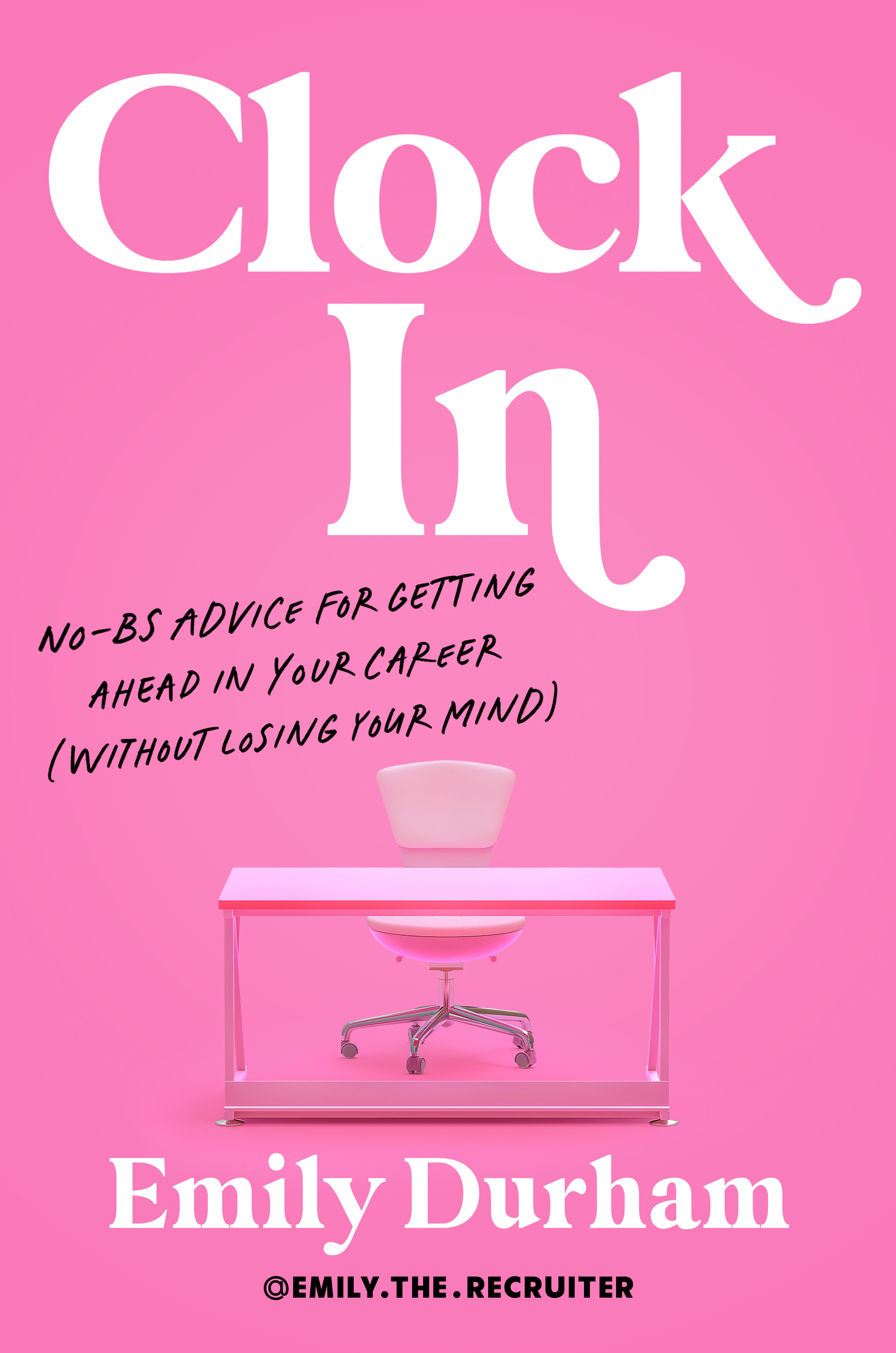
Have you ever wondered what’s happening internally at a company when they post a job? Check out an excerpt from the book Clock In for tips from Recruiter and author Emily Durham on demystifying the hiring process:
The role gets approved. At every company, in order for a job to be posted, it needs to be approved by either finance, HR, or some combination of the two, to ensure there’s a budget for the salary and approval on the title-in other words, to make sure there’s enough money to pay the person they hire. This means almost every job has a salary band determined by the time it’s posted, otherwise it wouldn’t have been approved.
The job description is written. The hiring manager writes a list of things the applicant needs to be able to do- or at least what they hope the applicant will be able to do. When I tell you not to take job descriptions too seriously, I mean it. Eighty percent of the time, a job description is written like a wish list of everything the ideal candidate should have, and most managers understand that their wish list isn’t completely realistic.
Tip: If you see a job you aren’t 100 percent qualified for, apply anyway.
The job is posted. The company posts the job description online. As a college student applying for internships, I believed the advice I heard online to only use certain job boards or to not use LinkedIn to apply for jobs. Now that I’ve worked in HR, I can confirm that is false. Most companies use an applicant tracking system (ATS), an internal platform for posting jobs, receiving applications, booking interviews, etc. The company posts the job once, directly from their ATS, and it funnels out to all the job websites. Likewise, applications from all those websites funnel in through the ATS.
Tip: Your application is going to the same place no matter which site you use, so use the site that is easiest for you and don’t waste your time stressing.
Applicants are reviewed. I was told by my college classmates that the best time to apply for jobs is Sunday night so that your résumé will be at the top of the pile when recruiters start reviewing applications on Monday morning. But once again, after working on teams of incredible recruiters, I quickly learned that the rumor mill was wrong. The Sunday night theory may be true for some recruiters, but certainly not for all, and therefore it isn’t a reliable variable to factor into your job search. Some recruiters check applications every morning, every evening, every other day, or (spoiler alert) never.
Recruiters prescreen candidates. After reviewing applications, the recruiter develops a short list of candidates who they think match the qualifications. Then they book a prescreen call to suss out initial fit. This chat usually lets the recruiter review your overall experience and whether you’re a fit for the company and the role before they present your résumé to the hiring manager. There may be as few as five or as many as a hundred candidates in this stage of the process competing against you.
Tip: Don’t worry about the number of candidates you’re going up against. It won’t matter if you’re the one.
Interviews are conducted. After the recruiter determines that you might be a fit for the position, they’ll present a group of candidates to the manager for review. The manager, based on the résumé and prescreen notes, will choose who is moving forward in the process.
Tip: Start preparing your introduction for the beginning of the interview.
Offers are made. After your interviews, the team will determine who is the best fit for the position and move forward with an offer for one, while keeping the runner-up candidate on the hook.
If you’re ready to work smarter, not harder, Clock In is the no-filter, no-fluff resource you need to thrive in your nine-to-five — and beyond.
You can order Clock In by Emily Durham here.
Applying to jobs at Penguin Random House? Visit applicant resources on our career site.
Disclaimer: This excerpt does not necessarily replicate the hiring process at Penguin Random House.